
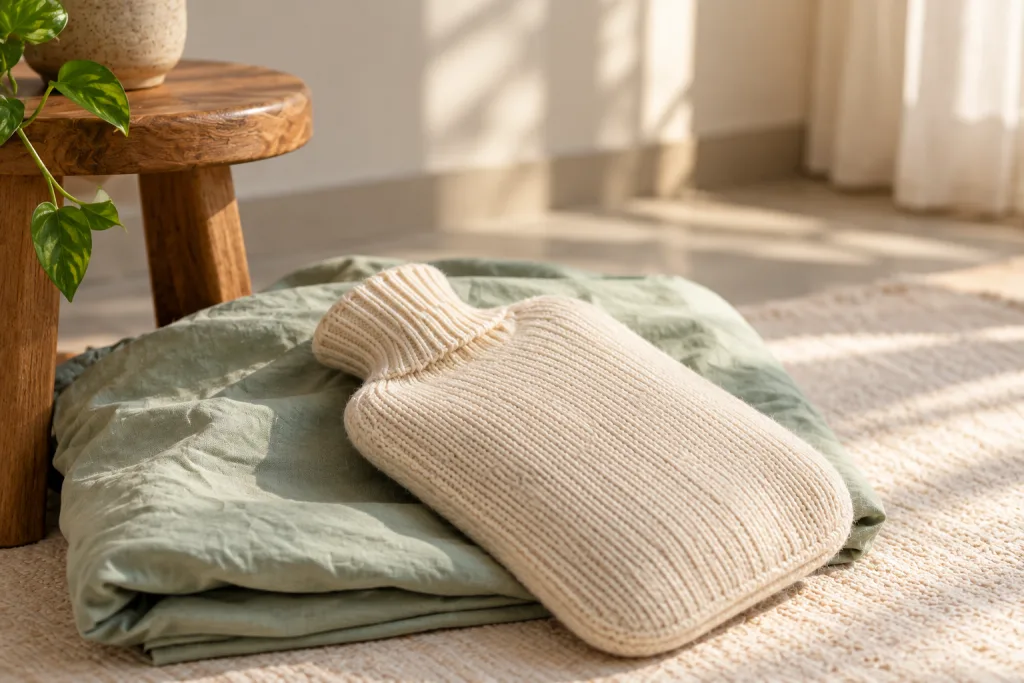
Short answer: there's no device for back pain that fixes it. The one with the best evidence is also the cheapest: plain warmth from a heat pack or hot-water bottle.[1][2] Moving matters more than anything you buy.[1]
We get asked this a lot at our Chennai centre, usually by someone who has had a sore back for weeks and already has a drawer of things bought online. So here's an honest look at what's worth trying and what isn't.
Is a heating device for back pain worth it?
Yes, for comfort. The NHS suggests a heat pack or hot-water bottle, wrapped in a tea towel, for stiffness or muscle spasms.[1] A Cochrane review found heat wraps gave a small, short-term drop in pain.[2] It won't solve the problem, but it can take the edge off while you keep moving. An electric heating pad does the same job. Keep it on a low setting with a cloth between it and your skin, and don't fall asleep on it.
What the guidelines say to skip
NICE, which advises doctors in the UK, recommends that TENS machines, back belts and corsets, traction, and home ultrasound or interferential units are not offered for low back pain.[3] That doesn't mean they hurt everyone. It means the evidence wasn't good enough to recommend them, so they're not worth a big spend.
Massagers and massage chairs sit in between. NICE says hands-on therapy such as soft tissue work can be considered, but only alongside exercise.[3] A massager can feel lovely at the end of the day. Just don't let it replace a walk. We wrote more about this in Is a massage chair good for back pain?
Where our devices fit
Our devices direct a gentle stream of warm air over the area, so they're one more way of applying warmth. We don't know of clinical trials showing they help back pain, and we don't promise results. You can read what the research says about terahertz. What we can say is that many visitors tell us a session feels relaxing, and you can try one free before deciding anything.
What makes the biggest difference
Keep going with your normal day as far as you can, and try some gentle exercises and stretches.[1] Long spells in bed tend to make backs stiffer, so the NHS advises against them.[1] If the pain keeps coming back, a physiotherapist can give you an exercise plan that suits you.[3]
When to see a doctor
See a doctor if your back hasn't improved after a few weeks, stops you doing everyday things, is worse at night, or the pain is high up between your shoulders.[1] Go sooner if you feel feverish or unwell, or if severe pain starts suddenly.[1] Get emergency help for numbness or weakness in both legs, loss of feeling around the genitals or bottom, trouble controlling your bladder or bowels, chest pain, or back pain after an accident.[1] In Chennai, call 108.
Sources
- NHS, Back pain
- French SD et al., Superficial heat or cold for low back pain (Cochrane review, 2006)
- NICE, Low back pain and sciatica in over 16s (NG59)
Written by the Prife iTeraCare team and last reviewed on 16 October 2026. This is general information, not medical advice, and it does not replace your doctor or physiotherapist. A session is a wellness experience, not a medical treatment.
Book a free session and see iTeraCare for yourself at our Anna Nagar centre.